I’ve Revamped and Rebranded the Digital Deliverance newsletter to Focus on What has Already Superseded the Mass Media as Consumers’ Predominant Way of Obtaining News, Entertainment, and Other information. As old dogs such as me get older, we sometimes forget the new…
Clear Evidence Existed 20 Years Ago Websites Won’t Compensate for Print Edition Losses Digital Deliverance Newsletter #4: When is a strategy recognized as disastrous? How long must its obvious devastation be experienced until it is called what it so clearly is? How…
Ask historians to say when the Industrial Era began and they will cite dates in the 18th or 19th centuries when a factory powered by hydraulics or steam engine was first constructed in their nation. I think they’re wrong. The start of…
Don’t Get Distracted from the Existential Problem In 1998 when I first began questioning if the Mass Media industries would have a future, the senior vice president of marketing at largest daily newspaper in Texas tried to reassure me, “People have been…
The Time for the Mass Media Industries to Awake to Reality More than 20 years ago, the Mass Media industries myopically and thus catastrophically bet their future on the wrong path adapting to personal computer-mediated technologies. Subscribe to the Digital Deliverance newsletter…
If you use Google Chrome, we think you will like this. Since it was first released in November 2017, one of our favorite smartphone apps has been Google Lens. Use it when aim your smartphone’s camera at an object and Google will…
Are you a journalist who is celebrating the release of Julian Assange? You might want to reconsider.
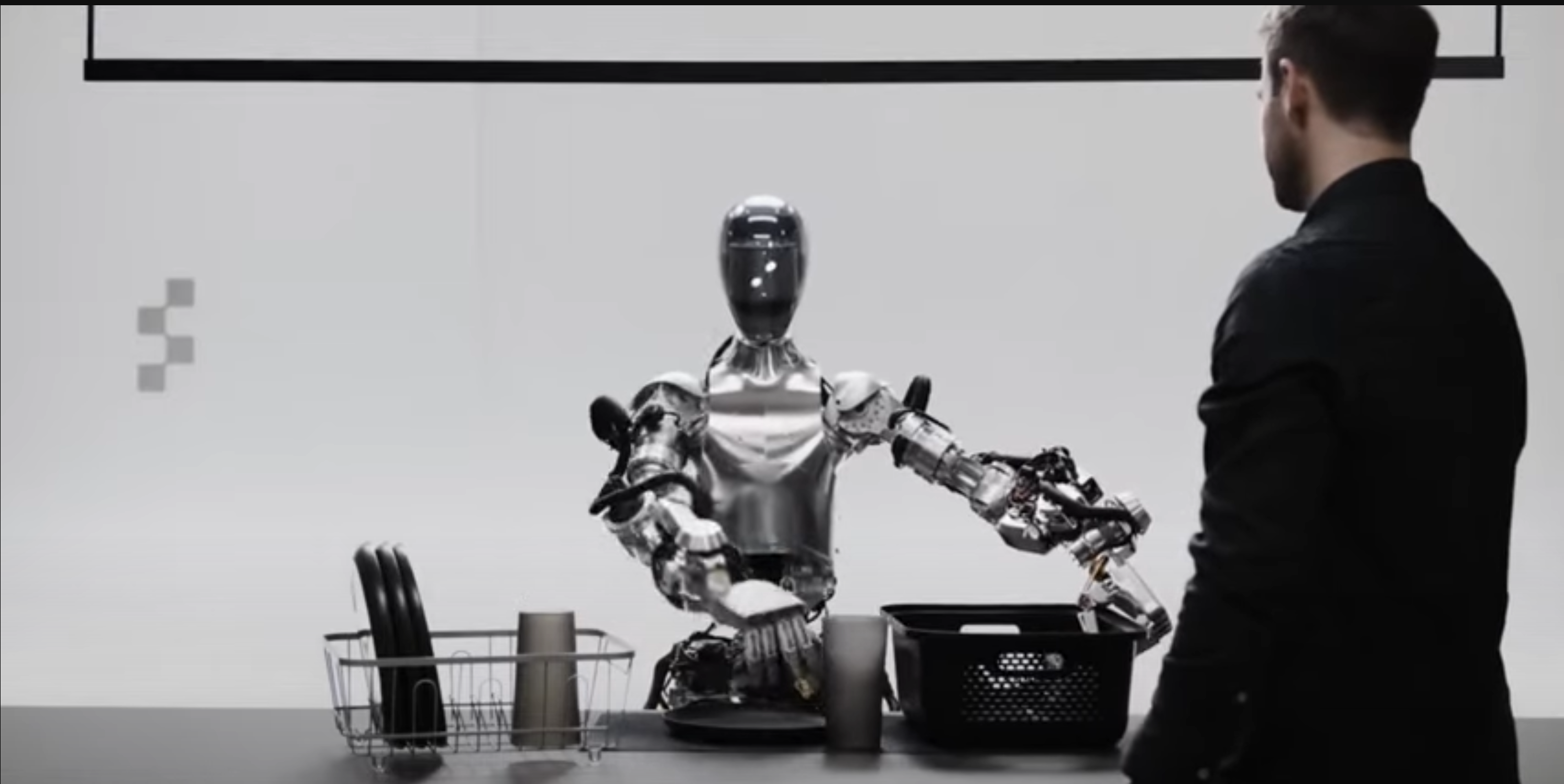
The convergence of ‘chatbots’, artificial voice, and artificial biped technologies has finally converge into an early version of the world’s first true robot.
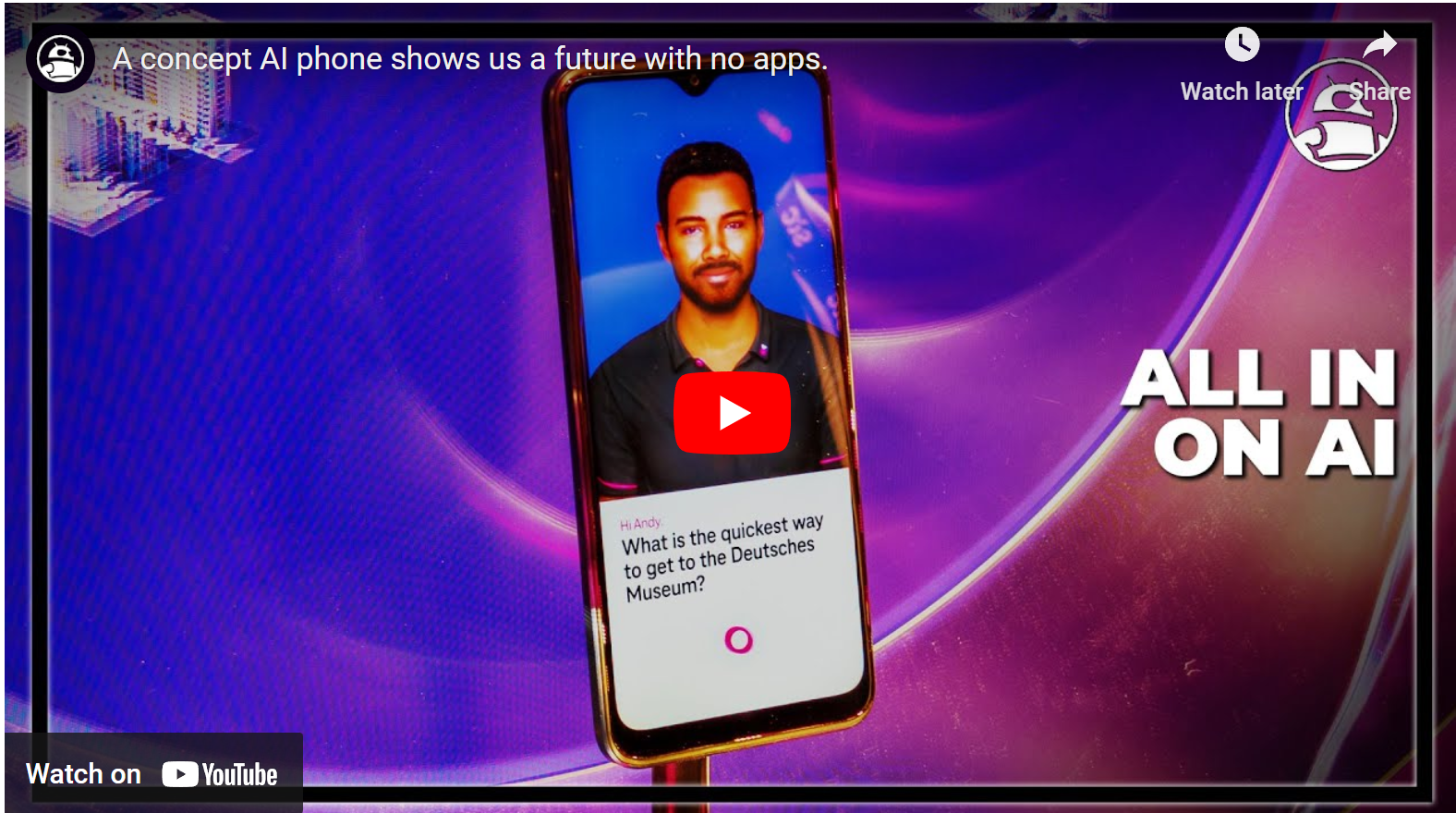
I wholeheartedly agree with this five-minute video story by Android Authority that the smartphone of the future won’t have or use Apps (i.e., individual single-purpose software applications) but instead simply use Artificial Intelligence (AI) to communicate/find/view.obtain/what its users wants.
I fear that a ‘golden age’ of ‘deceptive propaganda and deceptive marketing has begun now that realistic-appearing artificial videos can now be created by machine learning and Artificial Intelligences.
Why I’ve finally cancelled my subscriptions to Wired and to National Geographic magazines.
The 2025 biennial World Media Economics and Media Conference will be held May 20-25 in Warsaw.
I’m pleased to have been invited by the Scientific Committee of the World Media Economics and Management Conference to present my latest paper at WMEMC’s next biennial meeting this May in Seoul, South Korea.
Nearly 22 years ago, The New York Times (see story) if most consumers tend to gravitate towards the major news media sites online despite their back then having online access to all news media websites. Has that situation since changed?
Hey, you folks, experimenting with ChatGPT’s Artificial Intelligence for journalism or other reasons. Have you considered it unfortunately can also be used for hacking? This guy has, as he demonstrates. Twitter owner Elon Musk is shutting down the Revue emailed newsletter service,…
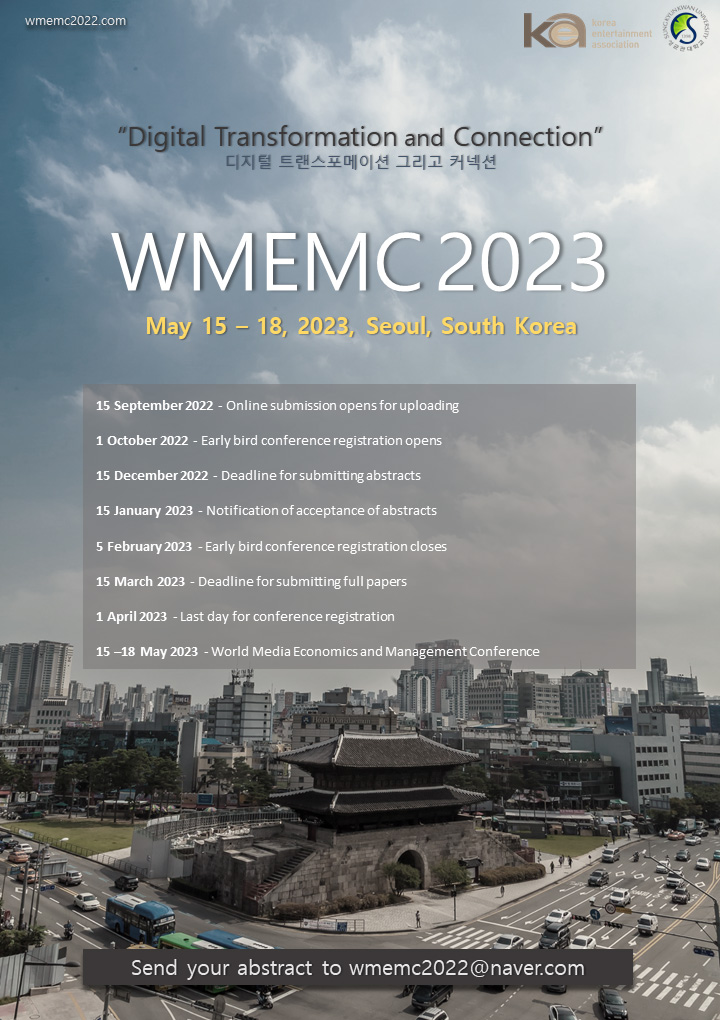
The biennial World Media Economics and Management Conference will be held May 15-18, 2023, at Sungkyunkwan University in Seoul, South Korea.
The passage of time proves whether or not a consultant’s foresight and advice were accurate. Judge for yourself if mine were.
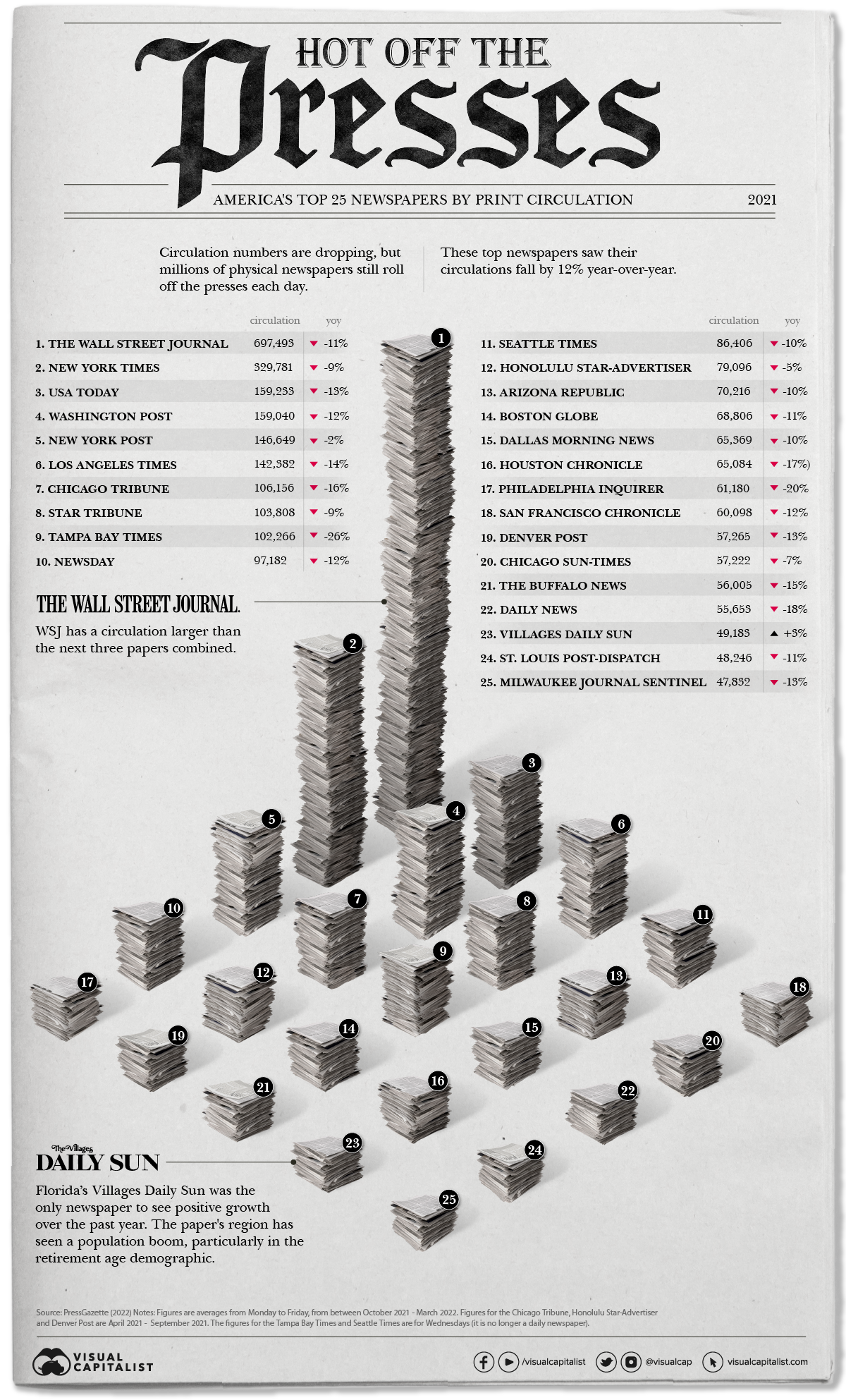
A graphic illustration from VisualCapitalist.com shows the dire situation of U.S. daily newspapers.
Reality is that the world’s newspaper industry, indeed all of the Industrial Era’s legacy industries that are colloquially referred to as the Mass Media, have ultimately failed to adapt to the New Media environment, despite more than 25 years of endeavors, to…
Journalism professors who themselves have no academic training or professional experience in business yet who either believe they have solutions to the news industries’ business problems or who without that training or experience teach ‘media entrepreneurship’ dilute and interfere with the real solutions to the actual problems of media management and news business models.
As yet another magazine ceases publication in print, let’s discuss the general reason why the Mass Media is imploding and being superseded by Individuated Media.
As the Informational Era era and its Individuated Media supersedes the Industrial Era, the latter’s centuries-old forms of media industries (colloquially known as ‘Mass Media’) continue to implode. The remnants of the what used to be known as the Newspaper Association of America absorbs the U.S. Magazine Publishers Association.
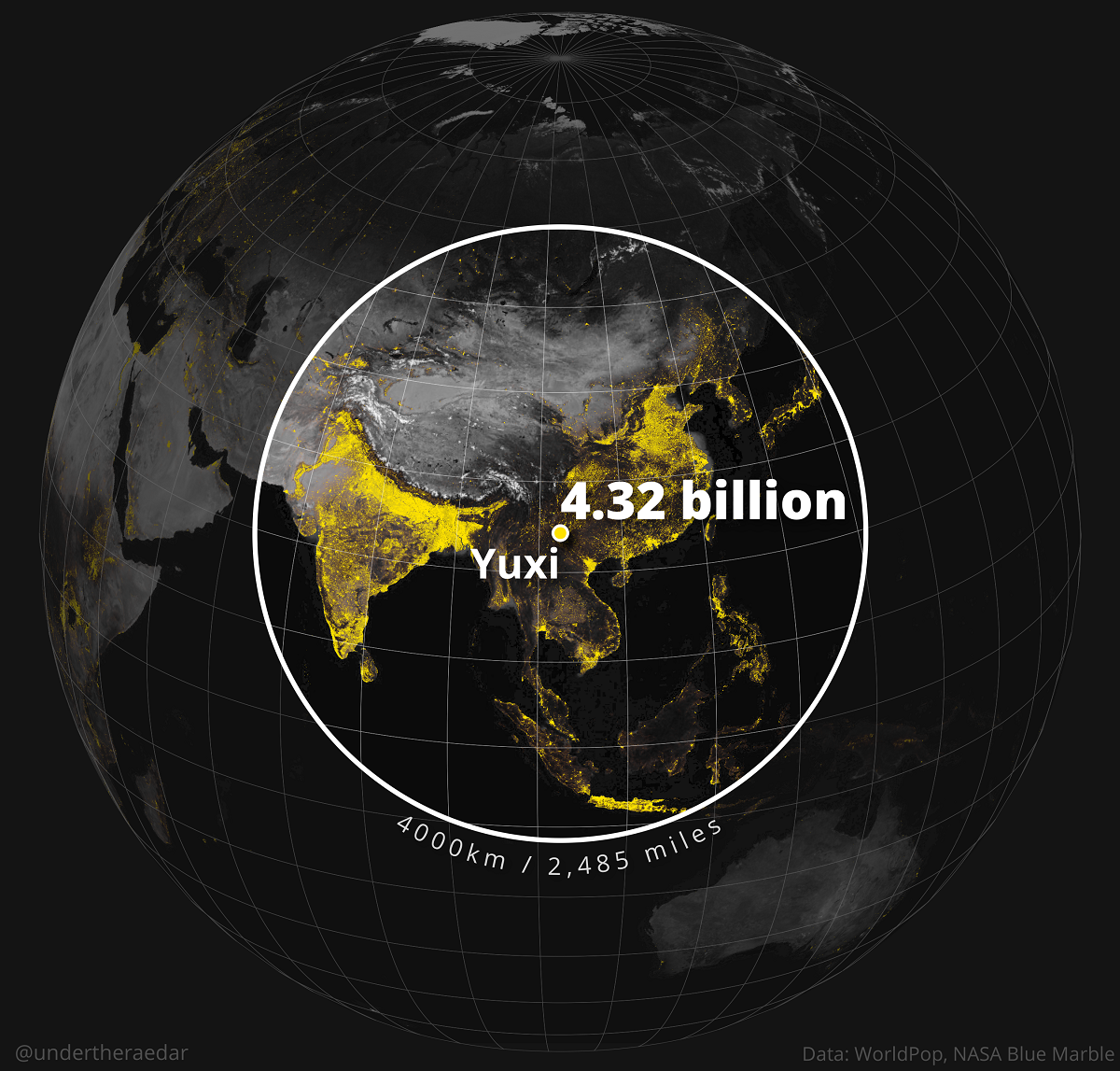
Anyone teaching Media Management needs to know the media within this geographic circle.
“The definition of the thing establishes its essence.” – ‘Metaphysics’, Aristotle (384-322 BCE) Know what are talking about. Otherwise, you might become a producer of hype rather than success. Words have real meanings. The traditional media industries are so woefully misusing terminology…
“It is with a heavy heart that we announce that WMEMC 2022 will be postponed to 2023.”
“In industry everyone focuses on achieving agreed-upon common goals. But in academia, everyone functions in their own bubble. We all work on our own research interests and we collaborate only when it’s necessary.” –Molecular Biologist Gavin Knott, quoted in The Code Breakers…
An evolutionary step now reached by TV and cinema is that computer-generated imagery can now reproduce any actor(s)’s visage, voice, and way of movement, so exactly and in such high resolution that the performance of the computer-generated version of the actor is indistinguishable on screen from that of the real actor.
I’ve spend much of the morning today watching a seminar in which eight daily newspapers from different European nations present their endeavors to generate subscriptions to their websites. I was perhaps the only one of the 1,200 people–virtually all from other daily newspapers, watching this online seminar not for its tips about how to generate online subscriptions but to assess how still myopic and misguided is the world’s newspaper industry. That industry, an integral product of the Industrial Era, botched its adaptation to the Information Era (an adaptation that nonetheless would have transformed that industry into something else). The error that botched its adaptation was that the industry’s ‘digital’ (i.e., ‘online’) pioneers (1995-2005) myopically misperceived computer-mediated technologies merely as means to delivery texts, still photos, and graphics, without purchasing, printing, and distributing paper editions. In other words, they saw online merely as a electronic distribution mechanism and websites as as non-paper versions of their traditionally printed editions.
I spoke at the World Media Economics & Management Conference this year in Rome, and am looking forward to next year’s conference, which will be held in Seoul [7-minute conference preview video].
In May, I presented my conceptual paper Individuated Media in the Informational Era at the biennial World Media Economics and Management Conference in Rome. The paper has since been published the in the peer-reviewed, quarterly Journal of Strategic Innovation and Sustainability. I…
A dozen days after partners Facebook and RayBan introduced their ‘smart glasses’, China’s Xiaomi (which is now the world’s second largest smartphone company, having surpassed Apple this year: marketshares: Samsung 19%, Xiaomi 17%, and Apple 14%), introduces its own. Fan in Hungary…
This article published the peer-reviewed Nordic Journal of Media Management asserts that new, extremely popular modes of media services have arisen during the past 25 years that need to be critically categorized as different from the Mass Media we have known from…
Consider the predicament Christian monks working in their scriptoria faced in middle of the 15th Century from Johannes Gutenberg’s invention of the moveable-type printing press. It will illuminate the challenge the publisher and broadcasters of Mass Media faced today. Their scriptoria’s hallowed…
Should companies such as Google and Facebook be forced to compensate publishers and broadcasters for linking? Also, does Facebook censor conservatives? And congratulations to the International Fact-Checkers Network on its Nobel Peace Prize nomination!
As the Industrial Era wanes and the Informational Era dawns, the focus of my consulting and career has changed from Mass Media to Individuated Media. If you don’t know what the latter are, read this.
R.I.P., Tiffany Shackleford, executive director of the Society of News Design. Adobe ceases all support for Adobe Flash. And Nikon stops building cameras in Japan.
The world’s media industries are more than a decade overdue to face, acknowledge, and act upon these nine bare facts about the epochal transformation of the media environment as the Industrial Era ends and the Information Era begins..
The U.S. newspaper industry’s trade journal interviews Vin Crosbie about that industry’s bright past and dim future.
Computer mediation means mediation, not simply electronic delivery. It means sorting and processing information on massive scales, which is what computerized technologies do best. They can sort, process, and deliver an individualized (i..e, individuated) supply of news to fit each individual consumer’s unique mix of needs, interests, and tastes. Computer-mediated technologies do this algorithmically. Computer-mediation is the hallmark of the dawning Informational Era. It makes no sense for legacy media industries not to embrace, adopt, and utilize these historically newfound capabilities. To use computer-media technologies merely as a means of electronic delivery is akin to using horses to pull an automobile along a paved road: a myopic misuse of capabilities.
Any technologies that can supply a consumer with the most precise mix of stories that match his own individual needs, interests, beliefs, and tastes, will triumph over technologies less precise. That is the reason why Google and other information search engines, why Facebook and other social media services, and why topical or ‘niche’ services that offer individuated feeds of music or other genres of information, have become so explosively successful during the past 20 years. Although they were not initial designed to provide consumers with individuated feeds of news, their computer-mediated algorithmic software can do so, as literally billions of consumers have discovered. This is why consumers now use such computer-mediated Individuated Media services as their predominant means by which they obtain news, entertainment, and other information, to the grave distress of legacy media industries that failed to adopt such technologies. That is how daily newspapers lost the future.
The financial disaster unforlding for the daily ewspaper industries due to the coronavirus pandemic is a late-stage event in an even greater struggle that has been underway in the media environment for more than 25 years. As the Industrial Era wanes and the Informational Era dawns, the predominant means by which most people under age 40 in developed countries obtain news, entertainment, and other information is now via Individuated Media rather than Mass. Click the headline to read this essay to find out what Individuated Media are and why they are supersededing Mass Media.
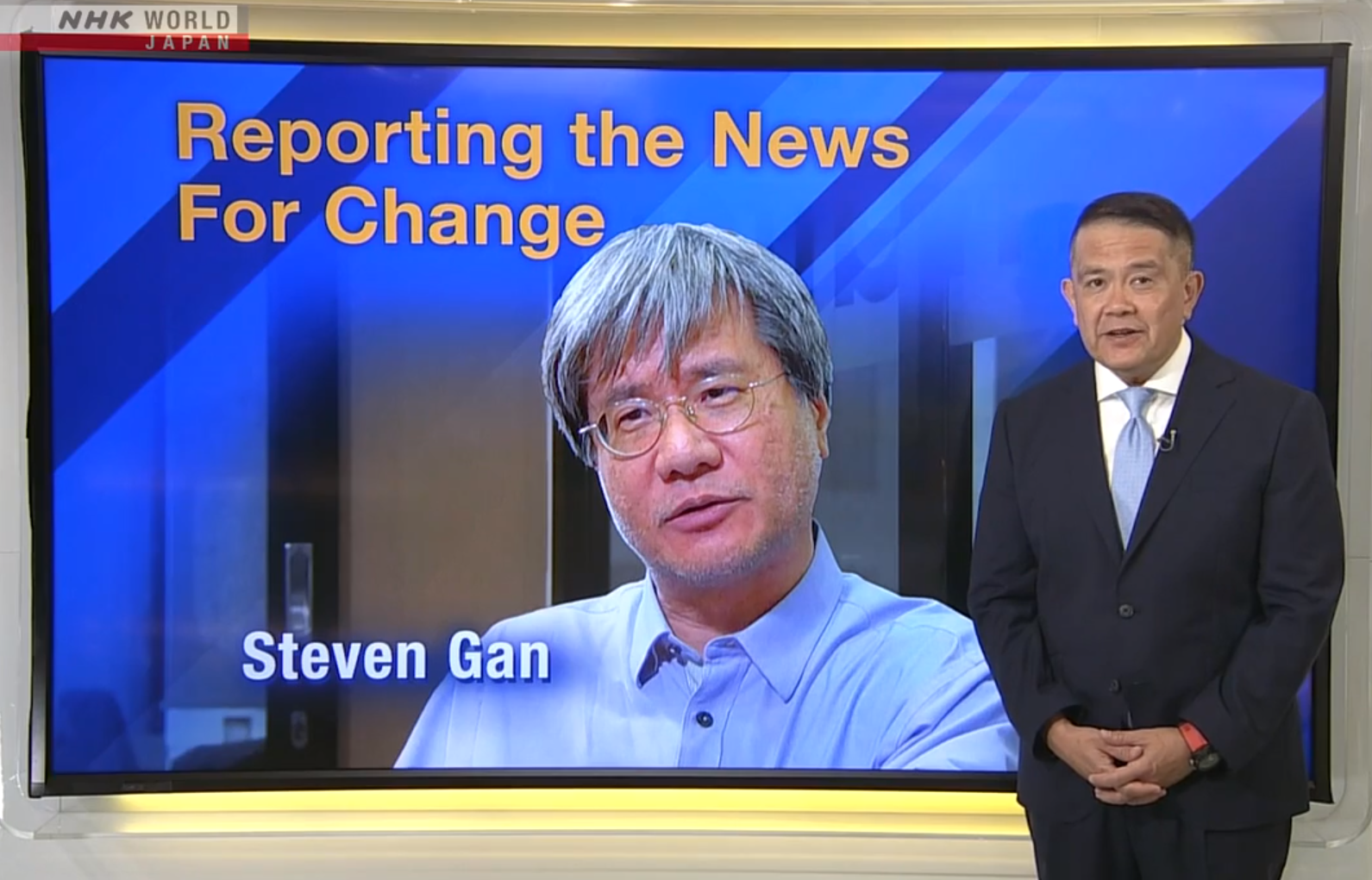
NHK, Japan’s national broadcast network, profiles Steven Gan, co-founder and editor-in-chief of Malaysiakini.com (‘Malaysia Today’), Malaysia’s only independent, uncensored news outlet. The 20-year old website is an excellent business model for sustainable journalism in countries arising from repressive regimes
Among the world’s many companies that are working towards Individuation of news feeds is Canopy, which was recently acquired by Cable News Network (CNN) . Founded in 2018, Canopy’s launched an iPhone app called Tonic, which is now reportedly being wound down. we speculate that CNN will utilize Canopy’s technologies to make CNN the sole content provider and will aim to launch a customized news feed for CNN.com’s users.
The most advanced New Media in the world aren’t in the United States but in either of two East Asian countries. South Korea is frequently called ‘the most wired’ nation in the world: virtually all of its 51 million people are online or, as the home to Samsung, the world’s largest manufacturer of smartphone, interconnected wirelessly. Across the Yellow Sea from , South Korean, however, lay the world’s largest population of Internet and smartphone users, who have the world’s most unique and hyperactive New Media market. I believe that it will be from China that most of the world’s New Media innovations during the 2020s will arise. The formidable uniqueness of the Chinese language itself, have caused many technologies, particularly those involving smartphones, to evolve rapidly and hyper-competitively during this past decade. I think that many of those Chinese media technologies will soon start percolating through those governmental and linguistic ‘firewalls’ and begin to be adopted (or ‘Westernized’) worldwide during the 2020s, becoming platforms upon which many of the next wave of technologies for media will be founded. It is time that Westerners learn more about these. [click the headline to read more]
It’s a Beatles vs. Rolling Stones question. What’s the difference between invention and innovation? Invention creates something that had no precursor; innovation makes remarkably better something that had a precursor. The world lauds inventors (Gutenberg, Edison, Marconi, Tesla, et. al.). Yet innovators often have greater effects on our everyday lives, plus it’s much easier to become one. If you’re open to new ideas! Take the example of a Japanese small foundry that found a way to reverse its fortune by being open-mined enough to turn what others called a flaw into a feature. View this four-minute video about Nousaku.[click the headline to read more]
I think The Correspondent will be just a boutique operation. It is in vogue, will have its time on the catwalk, but isn’t a journalism business model that can be widely used. My prediction is that The Correspondent itself will succeed, but it won’t have a scalable business model..[click the headline to read this article that appeared in the December 2018 edition of the Digital Deliverance newsletter.]
As Dr. Richard Fletcher, of Oxford University’s Reuters Institute for the Study of Journalism, explains, an ‘echo chamber’ can results when an online user self-selects the websites from which he gets news. However, a ‘filter bubble’ can result when instead an algorithm makes those selections for him: guessing via either programming, ‘machine learning’ artificial intelligence, or a combination of those, what his needs, interests, and tastes are. I think that subtle difference become ever more crucial as the background power (i.e., Moore’s Law) of computing becomes ever more advanced. The user himself is certainly more likely to know his own needs, interests, and tastes, better than any current algorithm can. However, his own self-selections will be more likely to create an ‘echo chamber’ around him. However, algorithmic systems, if they advance at the pace of Moore’s Law (and certainly with the advent of quantum computing) should within the new decade match or even exceed his own capability to match and delivery a mix contents to his needs, interests, and tastes [click the headline to read more]
I’m gratified that references to my 1998 essay, ‘What Is “New Media”‘, are increasingly appearing in academic papers. Examples: Study on Communication Ethics Relationship based on New Media Environment. by Zhi Li of Zhejiang University and Yueming Ge of Zhejiang Fashion Institute of Technology in China,…
Although 20 percent of British households already own a computerized voice service, such as Amazon Echo or Google Assistant, the government-funded British Broadcasting Corporation (BBC) will launch its own version called Beeb, according to a report in the Guardian newspaper and TechCrunch.…
Although the folk tale of Hane Pene [Danish: ‘Rooster Pene’) was originally Scandinavian, I tend to think of it as American whenever North Americans talk about forms of Artificial Intelligence (AI). The Dane. Just Mathias Thiele in 1823 published one of the…
Although I’m scheduled in late August to start my eleventh consecutive academic year teaching New Media Business, a required course which I wrote and for which I am the sole instructor in the S.I. Newhouse School of Public Communication’s master’s degree in…